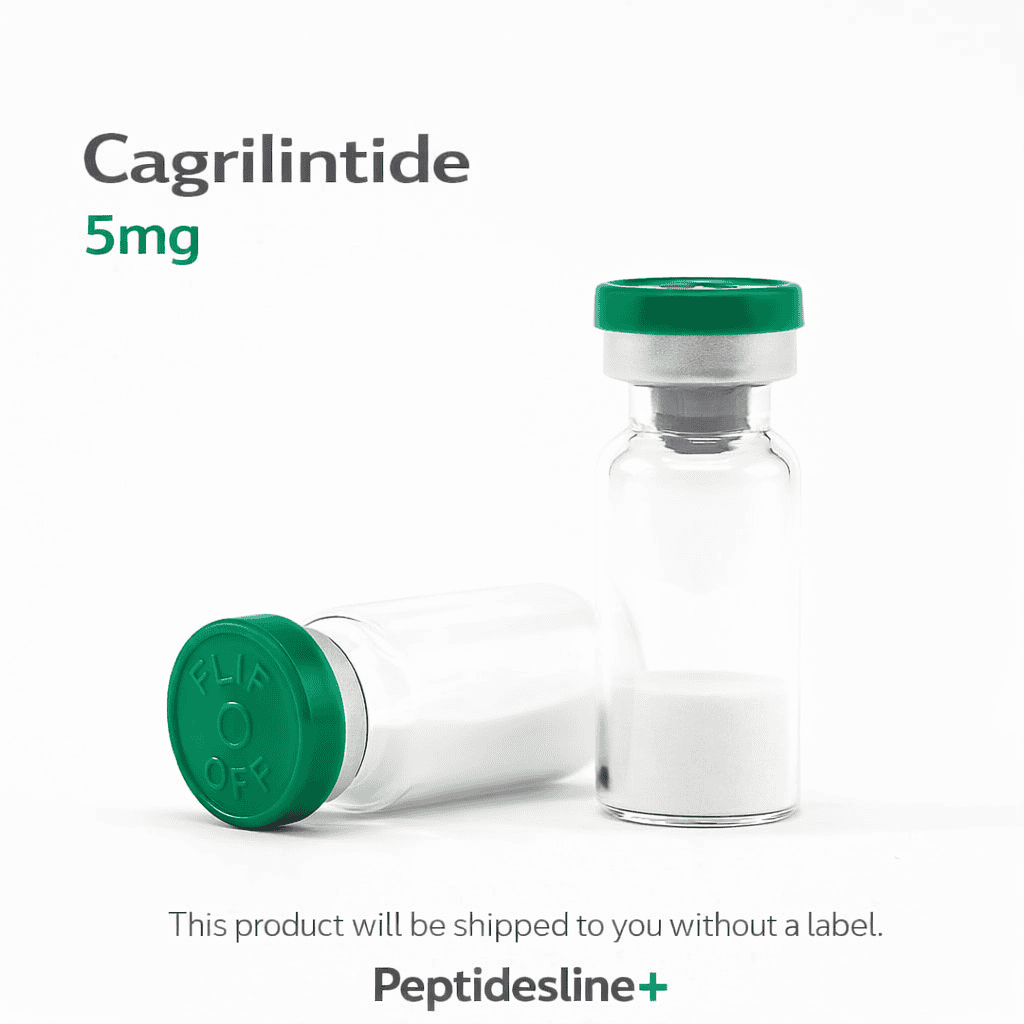
No LabelCagrilintide 5mg
| Quantity | Discount | Price |
|---|---|---|
| 3–5 | 10% | $50,40 |
| 6–9 | 15% | $47,60 |
| 10–100 | 20% | $44,80 |
Specifications
- Brand: No-Label HGH, Peptides & SARMs
- Substance: Cagrilintide Acetate
- Product Form: Powder
- Dosage: 5mg
How To Use
Cagrilintide is typically used through subcutaneous injection, usually once daily or several times a week depending on your goal and tolerance. It’s best taken before meals to help control appetite and improve satiety throughout the day. Start with a low dose to let your body adapt and gradually adjust under professional guidance. Consistency is key — pairing regular use with a clean diet and structured training plan will deliver the best results over time.
Shipping Details
Detailed Description
What Is No Label Cagrilintide 5 mg?
Cagrilintide is an innovative research peptide that acts as a long-acting non-selective amylin receptor agonist. While many metabolic peptides focus on intestinal hormones, Cagrilintide mimics the effects of amylin, a hormone co-secreted with insulin by the pancreas. This No Label 5 mg formulation is designed for researchers seeking to explore the next frontier of weight management and satiety control.
Unlike GLP-1 agonists that primary target the gut-brain axis, Cagrilintide works by enhancing the body’s natural fullness signals and slowing down gastric emptying through a different biological pathway. It is currently one of the most discussed compounds in the fitness and medical research communities because of its potential to produce significant weight shifts when used as a standalone or as a complementary tool in advanced metabolic protocols.
Benefits of No Label Cagrilintide 5 mg
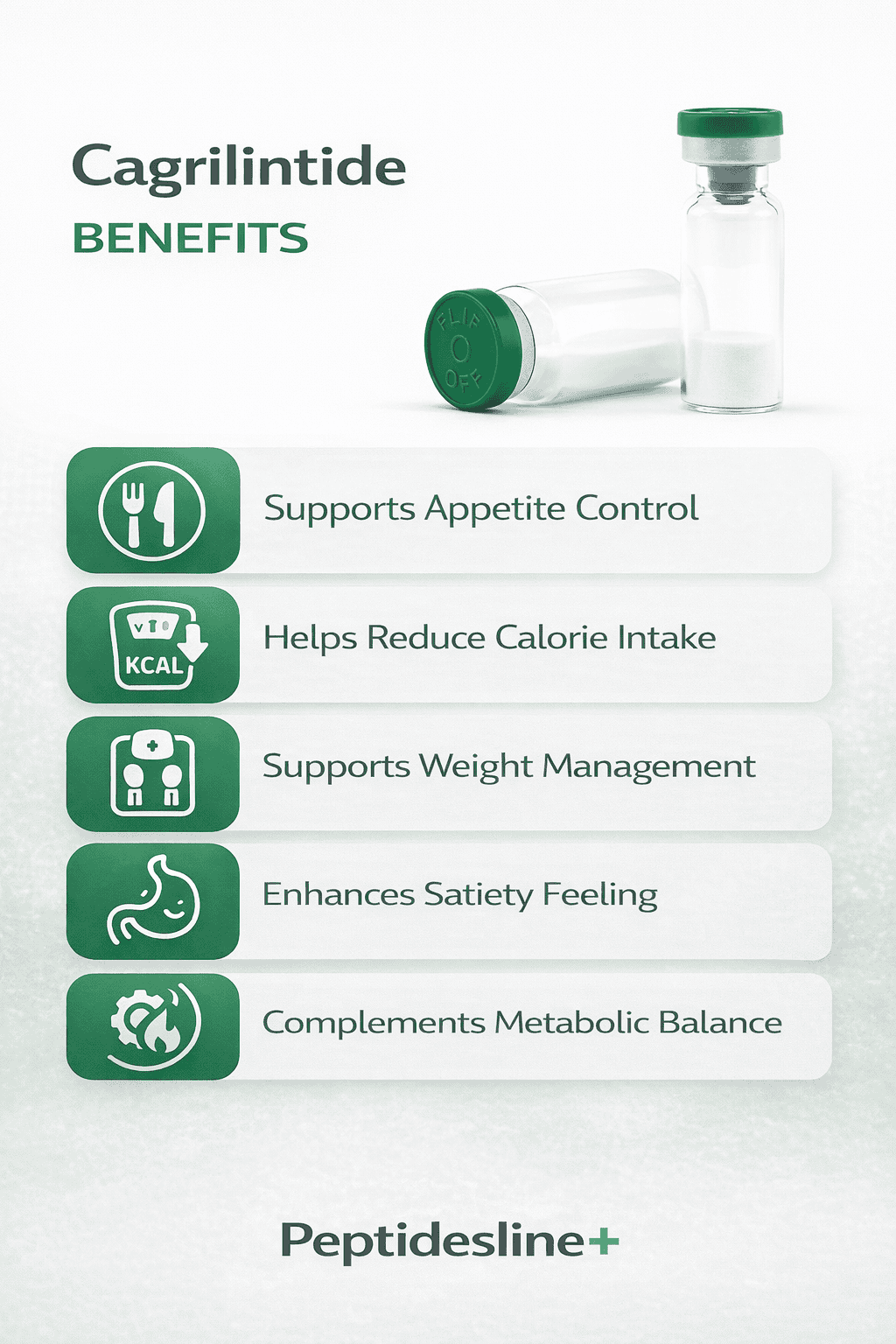
- Potent Satiety Induction: Cagrilintide is exceptional at inducing a profound sense of fullness. By mimicking amylin, it targets the area postrema in the brain, helping to reduce the overall desire for food and preventing overeating.
- Delayed Gastric Emptying: It slows the rate at which food leaves the stomach. This not only keeps you feeling full for longer periods but also helps in smoothing out post-meal blood sugar spikes, leading to more stable energy levels.
- Synergistic Metabolic Support: One of its standout features is its ability to complement other metabolic peptides. It addresses weight management from a unique angle, making it an effective tool for breaking through stubborn fat loss plateaus.
- Muscle-Sparing Potential: Because it focuses heavily on appetite regulation and glucose management, it allows users to maintain a caloric deficit with less metabolic stress, which is crucial for preserving lean muscle tissue during a cut.
How Does Cagrilintide Work?
Cagrilintide works by binding to and activating amylin receptors. Amylin is a hormone that works alongside insulin to regulate the post-prandial (after-meal) state. When Cagrilintide activates these receptors, it sends strong signals to the brain that the body has received enough nutrients. Additionally, it inhibits the secretion of glucagon—a hormone that raises blood sugar—thereby helping the body manage glucose more efficiently. This dual action of signaling satiety and regulating blood sugar makes it a highly effective metabolic regulator.
How to Take No Label Cagrilintide?
This product is supplied as a 5 mg lyophilized powder and must be reconstituted with bacteriostatic water. Cagrilintide is typically administered via a once-weekly subcutaneous injection. In research settings, protocols often begin with a low dose, such as 0.25 mg to 0.5 mg per week, to assess tolerance before gradually titrating up. The 5 mg vial is ideal for those following a structured, long-term research plan. It is recommended to administer the dose on the same day each week for consistent metabolic effects.
Cagrilintide for Fat Loss and Bodybuilding
In the bodybuilding world, Cagrilintide is gaining traction as a superior recomp and cutting agent. It is particularly valuable for athletes who find that traditional GLP-1 agonists alone aren’t enough to curb their appetite during extreme caloric restriction. By adding a different pathway of satiety (amylin), bodybuilders can maintain lower body fat levels with significantly less mental fatigue and hunger. It is specifically used for aggressive fat loss phases where controlling food noise is the primary challenge to achieving a stage-ready physique.
How long does it take to see results from Cagrilintide?
The reduction in appetite is usually felt within 24 to 36 hours after the first injection. Significant changes in body weight and a leaning out effect are typically visible by week 3 or 4. Because it works on the amylin pathway, the weight loss is often described as steady and sustainable, with the most dramatic transformations occurring over a 12-week research duration.
What are the potential side effects of Cagrilintide?
Like most metabolic peptides, Cagrilintide can cause mild gastrointestinal symptoms, such as nausea or a temporary decrease in appetite that may be stronger than expected. Some users may experience mild fatigue as the body adjusts to the new metabolic state. These effects are generally dose-dependent and can be minimized by starting with a conservative dose from the 5 mg vial and staying hydrated.
Can Cagrilintide be stacked with other Peptides?
Cagrilintide is famous for its stacking potential, particularly with GLP-1 agonists, to create a dual-pathway attack on fat stores.
| Compound | Goal | Comparison with Cagrilintide |
|---|---|---|
| Semaglutide | Maximum Weight Loss | Semaglutide targets GLP-1; Cagrilintide targets Amylin. Combined, they are significantly more powerful. |
| Tirzepatide | Metabolic Efficiency | Tirzepatide is a dual-agonist; Cagrilintide adds a third pathway for unmatched appetite control. |
| BPC-157 | Digestive Support | BPC-157 can help support gut health while the body adapts to slower gastric emptying. |
Where can I buy authentic No Label Cagrilintide online?
Quality and purity are the most critical factors when sourcing advanced peptides like Cagrilintide. At Peptidesline, we provide high-purity No Label Cagrilintide 5 mg, ensuring that your research results are accurate and consistent. We prioritize a seamless customer experience, offering fast 4–7 day shipping to the USA. We support secure payment methods including Zelle and Venmo for your convenience. For those looking for the best value, we offer a 10% discount on all orders paid via Bitcoin, Ethereum, USDT or Litecoin. Choose Peptidesline for professional-grade peptides and reliable delivery.
FAQ
Cagrilintide mimics the hormone amylin. While GLP-1 peptides mostly reduce hunger, Cagrilintide is studied in the peptide market for its ability to signal the brain that the body has had enough to eat. It creates a powerful sensation of satiety (fullness) that lasts throughout the week, making the 5 mg No Label vial a unique tool for metabolic research.
Yes. Cagrilintide is a non-hormonal peptide, making it a safe subject for female models in the peptides usa community. Beginners at Peptidesline.com find the 5 mg vial an excellent starting point because Cagrilintide has a long half-life, allowing for once-weekly research protocols. This simplicity, combined with its high safety profile, makes it ideal for entry-level metabolic studies.
Yes, especially for beginners. In many peptides usa research models, the starting dose for Cagrilintide is very low (around 0.3 mg per week). This means one 5 mg vial from Peptidesline.com can last for over 10 weeks of research, making it a very cost-effective option for observing long-term weight management and fullness signals.
The most basic method is adding 2 ml of bacteriostatic water to the vial. On this peptide scale, every 4 units on an insulin syringe will equal 0.1 mg of Cagrilintide. For a standard 0.3 mg research dose, you would simply draw up 12 units. This easy math helps users at Peptidesline.com avoid mistakes during their studies.
Absolutely. Cagrilintide is non-hormonal and does not affect estrogen or testosterone levels. Female researchers in the peptides usa community often study it specifically because it targets the brain's fullness centers without interfering with reproductive health. It is frequently studied as an add-on to other research cycles to enhance metabolic results.
Semaglutide is a GLP-1 receptor agonist, while Cagrilintide is an amylin receptor agonist. They work on different pathways to signal fullness to the brain.
Yes, many research protocols combine these to target GLP-1, GIP, and Amylin pathways simultaneously for maximum metabolic impact.
Cagrilintide helps regulate blood sugar but does not typically cause hypoglycemia when used responsibly, as it inhibits glucagon rather than forcing insulin release.